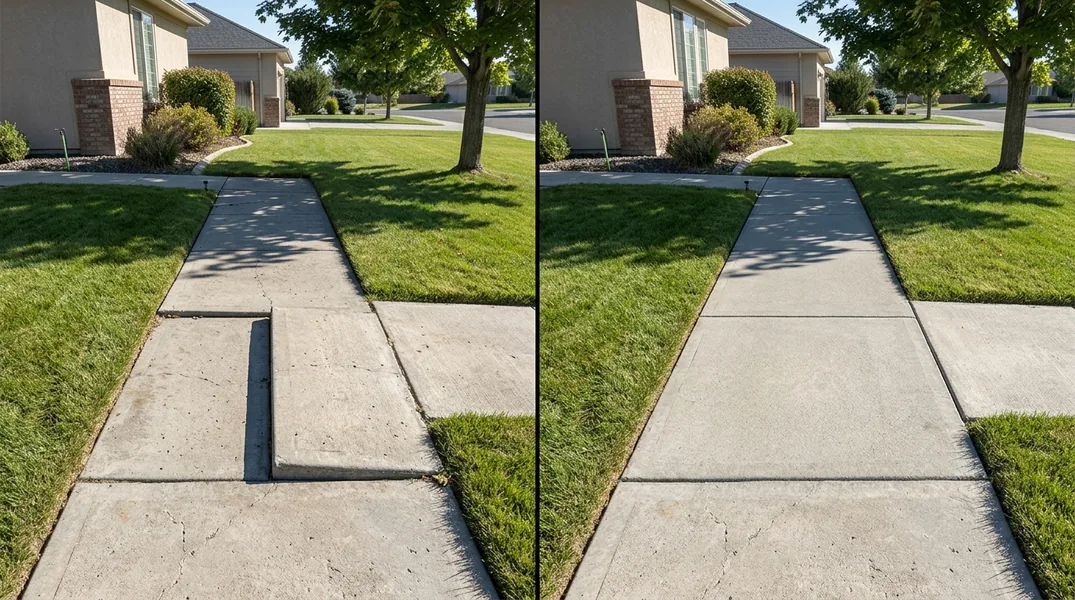
Understanding Collapsible Soil in Kennewick
If you own a home or business in Kennewick, you may have noticed something unsettling: concrete surfaces that seemed perfectly level a few years ago are now cracked, uneven, or visibly sinking. This isn't a defect in the concrete itself. The culprit lies beneath the surface, in the unique soil composition that characterizes the Tri-Cities region.
Kennewick is built on what geotechnical engineers call collapsible soil, a type of soil that is naturally loose and porous when dry. This soil contains high concentrations of silt and fine sand particles, which pack together loosely and leave significant air voids between them. When the soil remains dry, these air pockets support the weight of structures above without issue. However, when water infiltrates the soil, everything changes. The water fills those voids, causes the soil particles to shift and compact, and the ground literally collapses downward by several inches or even more. This phenomenon is known as collapsible soil settling, and it's one of the most common reasons homeowners in the Tri-Cities region experience Concrete Repair & Resurfacing needs.
The problem is compounded by the region's arid climate and extensive irrigation infrastructure. In many cases, homeowners aren't even aware that water is reaching the soil beneath their driveways and patios until visible damage appears. By then, settling may have already occurred, creating stress fractures and uneven surfaces that are both unsightly and potentially hazardous.
The Role of Irrigation in Soil Settling
The Tri-Cities area, including Kennewick, relies heavily on irrigation to maintain landscaping and agricultural productivity. While irrigation is essential for the region's economy and residential aesthetics, it also introduces a significant risk factor for concrete structures. When you water your lawn, garden, or landscaping features near your driveway or patio, that water doesn't simply evaporate. Much of it percolates down through the soil, reaching depths of several feet below your concrete surfaces.
This regular moisture infiltration is the primary trigger for collapsible soil settlement. A driveway that has been stable for ten years can suddenly begin settling once irrigation patterns change or intensify. Homeowners often don't connect the dots between their sprinkler system and their sinking concrete, but the relationship is direct and predictable. Even small leaks from underground irrigation lines, which are common in older systems, can cause significant settling over time. The constant moisture keeps the soil in a partially saturated state, preventing it from returning to its original density. As the soil slowly compacts, the concrete above it loses support and begins to settle unevenly.
Understanding this connection is crucial for protecting your investment. If you're planning new Concrete Driveways or Concrete Patios, proper site preparation and moisture management should be part of your planning from the start.
How Silty Soil Differs from Other Soil Types
Not all soil behaves the same way when exposed to moisture, and this is why collapsible soil settling is a regional issue. Silty soil, which dominates the landscape across the Tri-Cities, has a very different structure than clay-heavy soils or sandy soils found in other parts of the country. Silt particles are extremely fine, much finer than sand but coarser than clay. When these particles are dry and loosely packed, they create a soil structure that resembles a sponge. There's plenty of space between particles, and the soil feels relatively light and powdery.
When water enters silty soil, the particles don't just absorb moisture like a sponge absorbs water. Instead, the water acts as a lubricant, allowing the particles to slip past each other and settle into a denser configuration. This process can happen gradually over months or rapidly during periods of heavy irrigation or heavy rain. The result is a dramatic loss of volume in the soil layer, sometimes as much as 10 to 15 percent. For a concrete slab sitting on top of that soil, this loss of volume translates directly into settling and cracking. This is why homeowners in the region frequently encounter Concrete Repair & Resurfacing needs that seem to appear without warning.
Clay soils, by contrast, tend to swell when wet and shrink when dry, but they don't collapse in the same catastrophic way. Sandy soils drain too quickly to cause the same prolonged saturation effects. Silty soil is uniquely problematic, and it's the dominant soil type throughout the Tri-Cities area. This geological reality means that any homeowner or business owner in Kennewick needs to be aware of settling risks and take preventive measures seriously.
Warning Signs Your Concrete Is Settling
Recognizing the early signs of concrete settling can help you address the problem before it becomes severe and expensive to repair. The most obvious sign is visible unevenness in your driveway or patio surface. You might notice that one section of your driveway is noticeably lower than an adjacent section, creating a lip or step. This unevenness often develops gradually, so comparing photos taken months or years apart can help you spot the trend. Another common warning sign is a pattern of cracks, particularly diagonal or stair-step cracks that suggest differential settling rather than random stress.
Water pooling or standing water on your concrete surface is another red flag. If your driveway or patio used to drain properly but now collects water after rain or irrigation, settling may have altered the slope. This pooling water then seeps into the soil beneath your concrete, potentially accelerating further settling. You might also notice that doors or windows in your home are becoming difficult to open or close, which can indicate that the foundation or the concrete pad beneath your structure is settling unevenly. In some cases, you may see gaps developing between your concrete and adjacent structures, or cracks appearing in the concrete itself.
If you've noticed any of these signs, it's important to have your concrete evaluated by a professional. Kennewick Concrete can assess whether settling has occurred and recommend the best course of action. Early intervention can often prevent minor settling from becoming a major structural problem. Contact Kennewick Concrete at (509) 581-2047 to schedule a free estimate and get expert advice tailored to your specific situation.
Concrete Repair Solutions for Settling in Kennewick
When concrete has settled due to collapsible soil, several repair options are available depending on the severity of the damage and your long-term goals. The most effective solution is mudjacking, also called slab jacking, which involves pumping a dense slurry beneath the settled concrete to lift it back to its original level. This process can restore your driveway or patio to a safe, level surface without the cost and disruption of complete replacement. Mudjacking works well for settling caused by soil compaction, and it's a popular choice for homeowners in Kennewick who want to extend the life of their existing concrete.
Another option is polyurethane foam injection, a newer technology that uses expanding foam to lift settled slabs. This method is less invasive than mudjacking and can be effective for smaller areas or more delicate structures. However, the most permanent solution for severely damaged or repeatedly settling concrete is often replacement with proper site preparation. When new concrete is installed, the underlying soil should be properly compacted and treated to minimize future settling risk. This is where working with an experienced contractor like Kennewick Concrete becomes invaluable. Our team understands the unique challenges posed by Kennewick's silty soil and can recommend the best repair or replacement strategy for your situation.
The pricing for concrete repair varies depending on the size of the affected area, the severity of settling, and the repair method chosen. For a detailed assessment and personalized quote, reach out to Kennewick Concrete today. Our team is ready to help you restore your concrete to safe, functional condition.
Prevention Strategies for New Concrete Projects
The best approach to dealing with collapsible soil settling is prevention. If you're planning a new driveway, patio, or other concrete project in Kennewick, taking steps during installation to minimize settling risk will save you money and headaches in the long run. The first step is proper site preparation. The soil beneath your concrete should be compacted to the maximum practical density before the concrete is poured. This reduces the air voids that cause collapsible soil problems. Additionally, the subgrade should be tested to understand its composition and settling potential.
Controlling moisture is equally important. Proper drainage around your concrete surfaces helps prevent water from accumulating beneath them. This includes sloping the concrete away from structures, installing drainage systems if necessary, and being mindful of irrigation placement. Avoid running sprinkler systems directly adjacent to concrete slabs, and ensure that any irrigation lines are properly maintained and not leaking. Some contractors in the Tri-Cities region also recommend using a moisture barrier beneath concrete in high-risk areas, which can further reduce the risk of settling.
When you're ready to invest in new Concrete Driveways, Concrete Patios, or Stamped & Decorative Concrete, choosing a contractor who understands regional soil conditions is critical. Kennewick Concrete has years of experience building concrete structures that stand up to the unique challenges of the Tri-Cities area. Contact us at (509) 581-2047 or request a free estimate to discuss your project and learn how we can help you build concrete that lasts.
Looking for a professional concrete contractor in Kennewick? Kennewick Concrete responds fast for all your concrete needs.
Get a Free QuoteOur services: Concrete Driveways · Concrete Patios · Stamped & Decorative Concrete