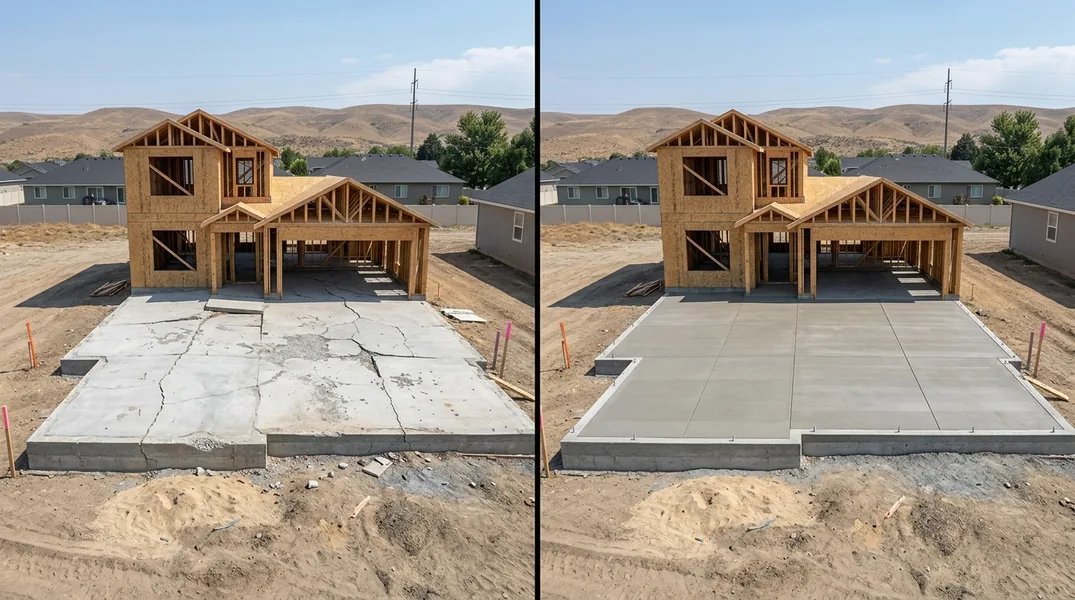
Understanding New Construction Concrete Slabs in Kennewick
Buying a new construction home in Kennewick is an exciting milestone, but it comes with unique responsibilities. Unlike purchasing an existing home where the foundation has already settled and proven itself over time, new construction means you're getting a concrete slab that's fresh from the pour. Understanding what you're looking at and what to expect is critical before you sign the closing papers.
A new construction concrete slab serves as the structural foundation for your entire home. In the Tri-Cities region, builders typically pour concrete slabs on grade, which means the concrete sits directly on prepared soil and gravel base layers. This method is common in Washington because it's cost-effective and works well in our climate, but it also means the slab can be vulnerable to settling, cracking, and other issues if not properly installed. The concrete you see on closing day won't look the same in six months or a year, and that's normal. What matters is understanding what's acceptable movement and what signals a real problem that your builder should address.
What to Look for During Your Pre-Closing Slab Inspection
Before closing day arrives, schedule a thorough builder foundation inspection of your new construction slab. This isn't optional if you want peace of mind. Walk the entire perimeter and interior of the slab with a trained eye, looking for signs of poor workmanship or potential future problems. Hairline cracks in concrete are normal and expected, especially in new pours. However, wide cracks (wider than one-eighth of an inch), cracks that run at odd angles, or multiple cracks in a concentrated area can indicate problems with the base preparation, concrete mix, or curing process.
Check for settlement or unevenness by looking at how the slab sits relative to door frames, walls, and thresholds. A new slab may have minor variations in height, but significant slopes or depressions suggest inadequate base preparation or poor drainage planning. Look at the slab's edges and where it meets the stem wall or foundation. Spalling (flaking or scaling of the concrete surface) or discoloration may indicate exposure to water or salt during the curing phase. Don't hesitate to use a level to verify that critical areas like the garage floor or kitchen are reasonably flat. These details matter now, before you close, because addressing them after closing becomes your financial responsibility.
Decoding Your New Home Foundation Warranty
Every new construction home comes with a new home foundation warranty, but these warranties vary significantly in what they actually cover. Before closing, obtain a copy of your builder's warranty documentation and read it carefully. Most builder warranties in Washington cover structural defects for one to ten years, depending on the builder and the specific defect. However, many warranties exclude cosmetic cracks, minor settlement, or damage caused by poor drainage or site conditions outside the builder's control.
Understand the difference between a structural defect and normal concrete behavior. A structural defect is something that compromises the integrity of your home, such as significant differential settlement that causes walls to crack or doors to jam. Normal behavior includes minor hairline cracks, small surface spalling, or slight unevenness that doesn't affect the home's function. Your warranty should spell out the process for making a claim, any time limits for reporting issues, and what the builder will do to remedy problems. Don't assume your homeowner's insurance covers foundation defects, because it typically doesn't. The warranty is your protection, so keep it in a safe place and reference it if issues arise during the warranty period.
Common Concrete Slab Issues in Tri-Cities New Builds
The Tri-Cities region, including Pasco and Richland, experiences specific environmental conditions that can affect new construction concrete slabs. Our semi-arid climate means dramatic temperature swings between seasons, which causes concrete to expand and contract. This thermal cycling can open up cracks or cause the slab to cup (edges higher than the center). While some movement is inevitable, excessive cracking suggests the concrete may not have been properly air-entrained or the base wasn't adequately compacted.
Poor drainage is another common issue in new construction throughout the Tri-Cities. If grading around the foundation doesn't slope away from the house, or if gutters aren't installed or maintained, water can pool against the slab. This moisture can cause efflorescence (white powdery deposits), erosion of the base material, and accelerated concrete deterioration. Before closing, verify that the lot grading directs water away from your home and that downspouts will direct roof runoff at least four to six feet from the foundation. Additionally, check whether the builder included proper vapor barriers under the slab. A missing or inadequate vapor barrier can lead to moisture problems in basements or crawl spaces, which may not be immediately obvious but will cause headaches down the road.
Questions to Ask Your Builder Before Closing
Don't be shy about asking your builder detailed questions regarding your new construction slab. Request documentation showing the concrete mix design, including the water-to-cement ratio, air content, and any additives used. Ask about the base preparation process, the thickness of gravel and sand layers, and how the base was compacted. Find out when the concrete was poured, how long it was allowed to cure before foot traffic, and what weather conditions existed during and immediately after the pour. These details matter because they directly affect the slab's long-term performance.
Ask your builder about the drainage plan for your specific lot. Where will water go during heavy rain? How is the grading designed to protect your foundation? Request a copy of the site plan showing drainage patterns and any drainage systems installed. Inquire about the vapor barrier under the slab and what type was used. Finally, get a clear written explanation of what the warranty covers, the process for making claims, and the builder's contact information for warranty service. If you're planning future improvements like Concrete Driveways or Concrete Patios, ask the builder whether the existing slab is suitable as a base and whether any special considerations apply.
When to Call a Professional for a Second Opinion
If you have any doubts about your new construction slab's quality or condition, hire a professional concrete inspector or structural engineer before closing. This is money well spent. A qualified professional can identify issues that an untrained eye might miss, and their report provides documentation if problems develop later. In Kennewick, local concrete contractors like Kennewick Concrete understand the regional climate and soil conditions and can offer valuable insights into whether your slab meets local standards and best practices.
If you notice significant issues after closing and your warranty is limited, you may need professional Concrete Repair & Resurfacing services to address cracks, settling, or other damage. However, prevention through careful inspection before closing is always preferable to remediation after the fact. If you have questions about your slab or want a professional evaluation, contact Kennewick Concrete at (509) 581-2047 for a free estimate and expert guidance.
Looking for a professional concrete contractor in Kennewick? Kennewick Concrete responds fast for all your concrete needs.
Get a Free QuoteOur services: Concrete Driveways · Concrete Patios · Stamped & Decorative Concrete